Published on September 28, 2024
Risk Management Strategies for Active Trading
Effective risk management is the cornerstone of sustainable trading success. This comprehensive guide explores fundamental principles that professional traders use to protect their capital and maintain disciplined trading practices across various market conditions.

Understanding Position Sizing
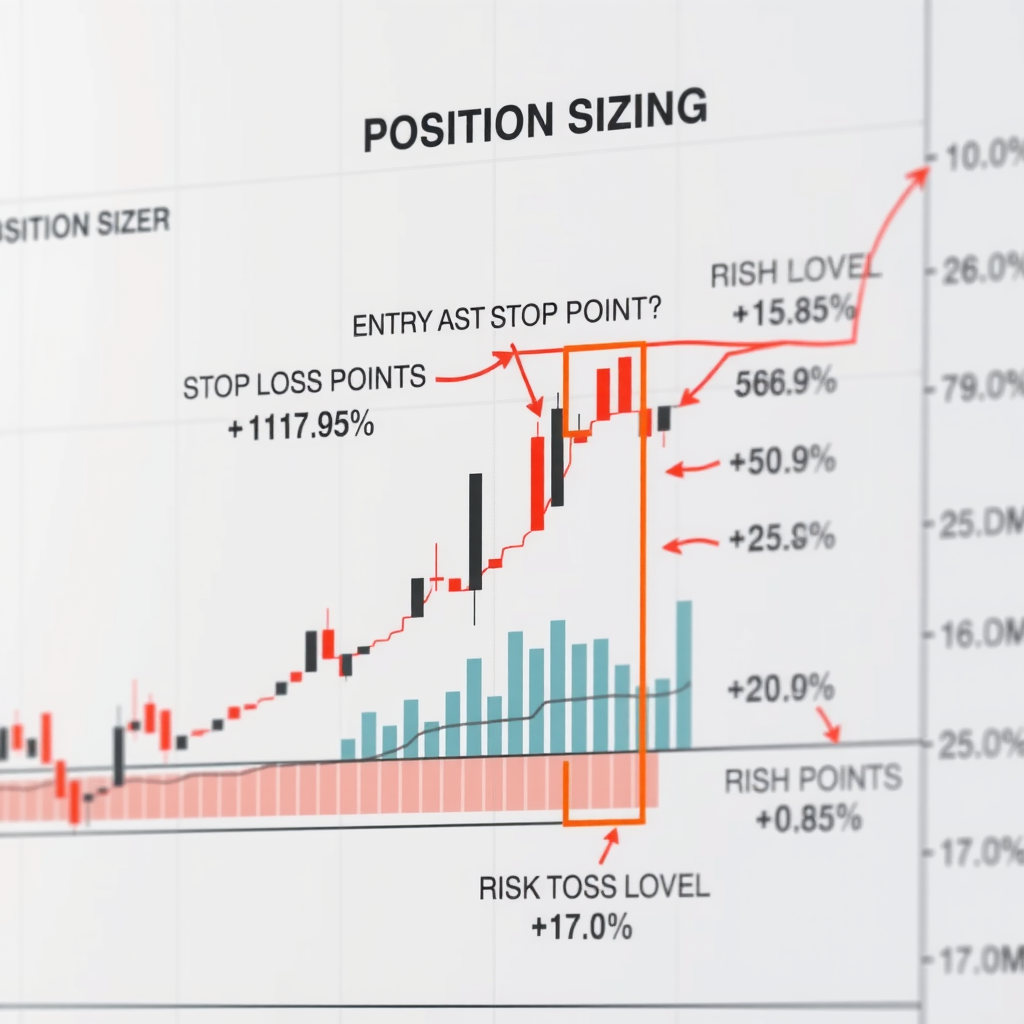
Position sizing represents one of the most critical yet often overlooked aspects of trading risk management. The fundamental principle involves determining how much capital to allocate to each trade based on your total account size, risk tolerance, and the specific characteristics of the trading opportunity.
Professional traders typically risk between 1% and 2% of their total trading capital on any single position. This conservative approach ensures that even a series of consecutive losses won't significantly impair the trading account. For example, with a $100,000 account and a 1% risk per trade, a trader would limit potential loss on each position to $1,000.
Key Position Sizing Formula
Position Size = (Account Risk %) × (Total Capital) ÷ (Distance to Stop Loss)
The calculation must account for the distance between your entry price and stop-loss level. A wider stop-loss requires a smaller position size to maintain the same dollar risk, while a tighter stop-loss allows for a larger position within the same risk parameters.
Strategic Stop-Loss Placement
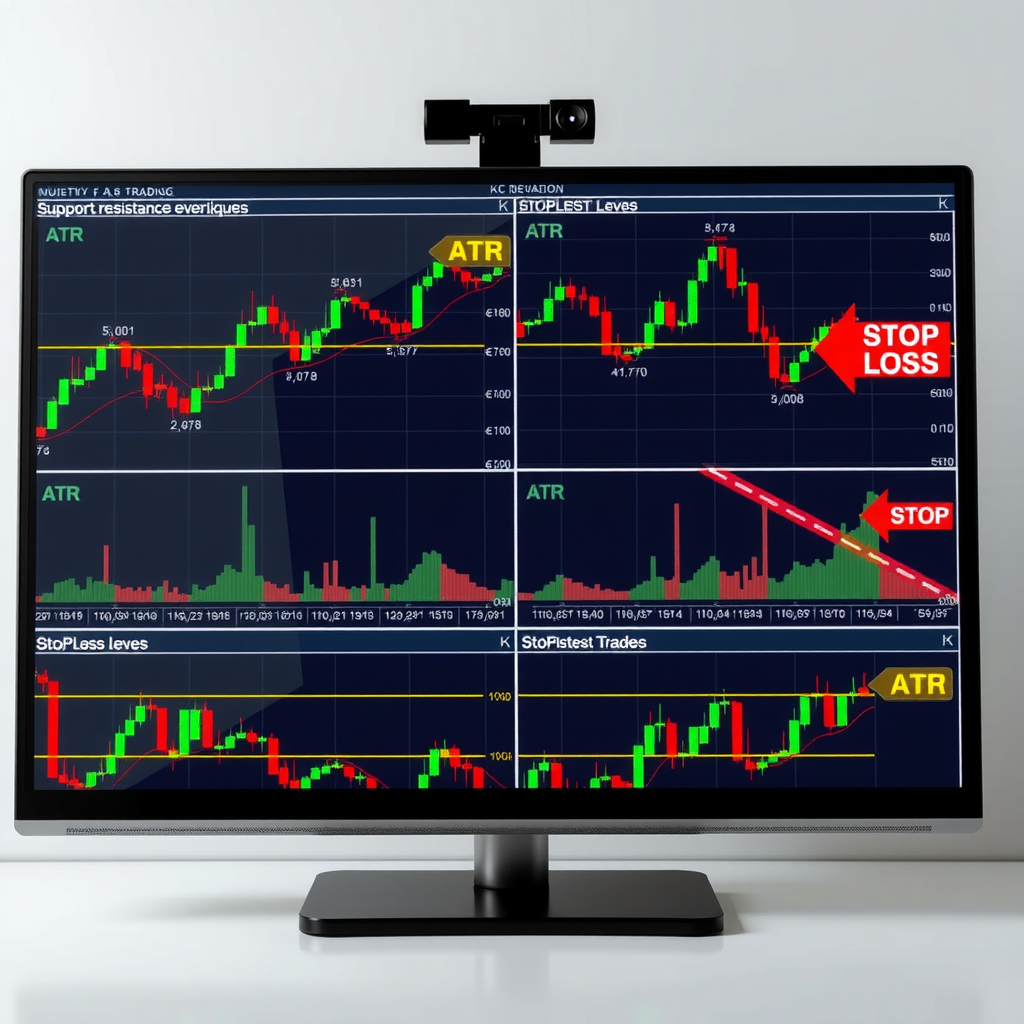
Stop-loss orders serve as your primary defense mechanism against excessive losses. However, their placement requires careful consideration of both technical analysis and market structure. Placing stops too tight may result in premature exits due to normal market volatility, while stops placed too wide expose you to unnecessary risk.
Professional traders often use technical levels such as support and resistance zones, moving averages, or volatility-based indicators like Average True Range (ATR) to determine optimal stop-loss placement. The key is finding a balance between giving the trade enough room to develop while maintaining strict risk control.
Common Stop-Loss Strategies
- Percentage-Based Stops:Setting stops at a fixed percentage below entry (e.g., 2-3% for swing trades)
- Technical Level Stops:Placing stops just beyond key support or resistance levels
- Volatility-Based Stops:Using ATR multiples to account for market volatility
- Time-Based Stops:Exiting positions after a predetermined time period if targets aren't reached
- Trailing Stops:Adjusting stops to lock in profits as the trade moves favorably
Important Note:Never move a stop-loss further away from your entry point to avoid being stopped out. This violates fundamental risk management principles and can lead to catastrophic losses. If your initial stop-loss placement was correct, honor it regardless of short-term price action.
Portfolio Diversification Principles
Diversification extends beyond simply trading multiple instruments. Effective portfolio diversification for active traders involves spreading risk across different asset classes, market sectors, trading strategies, and time frames. This approach helps mitigate the impact of adverse movements in any single position or market segment.
Consider diversifying across uncorrelated or negatively correlated assets. When one position experiences drawdown, others may remain stable or even profit, smoothing your overall equity curve. However, over-diversification can dilute returns and make portfolio management unwieldy. Most professional traders maintain between 5 and 15 active positions depending on their capital base and trading style.
Diversification Dimensions
Asset Class Diversification
Spread exposure across equities, commodities, currencies, and fixed income instruments to reduce correlation risk and capture opportunities in different market environments.
Sector Diversification
Avoid concentration in single sectors. Technology, healthcare, energy, and financial sectors often move independently, providing natural hedging opportunities.
Strategy Diversification
Employ multiple trading strategies such as trend following, mean reversion, and breakout trading to perform well in different market conditions.
Time Frame Diversification
Combine short-term day trades with longer-term swing positions to balance quick profits with sustained trends and reduce daily volatility impact.
Risk-Reward Ratio Analysis
Every trade should be evaluated through the lens of risk-reward ratio before execution. This metric compares the potential profit of a trade to its potential loss. Professional traders typically seek risk-reward ratios of at least 1:2, meaning they aim to make twice as much on winning trades as they risk losing on losing trades.
A favorable risk-reward ratio allows traders to be profitable even with a win rate below 50%. For example, with a 1:3 risk-reward ratio, you only need to win 25% of your trades to break even, and anything above that generates profit. This mathematical edge is crucial for long-term trading success.
Maximum Drawdown Management
Maximum drawdown refers to the largest peak-to-trough decline in your trading account. Managing drawdown is essential because larger losses require exponentially larger gains to recover. A 50% loss requires a 100% gain just to return to breakeven, highlighting why preventing large drawdowns is more important than chasing large gains.
Establish clear drawdown limits for both individual positions and your overall portfolio. Many professional traders implement a daily loss limit (typically 2-3% of account value) and a monthly drawdown limit (usually 6-10%). When these thresholds are reached, trading activity is suspended until the trader can reassess their approach and market conditions.
Recovery Requirements After Drawdown
| Drawdown Percentage | Required Gain to Recover |
|---|---|
| 10% | 11.1% |
| 20% | 25% |
| 30% | 42.9% |
| 40% | 66.7% |
| 50% | 100% |
Correlation and Concentration Risk
Understanding correlation between your positions is vital for true risk management. Holding multiple positions that move in tandem doesn't provide genuine diversification. During market stress, highly correlated positions can all move against you simultaneously, multiplying your losses.
Monitor correlation coefficients between your holdings. A correlation of +1.0 means two assets move perfectly together, while -1.0 indicates perfect inverse movement. Aim for a portfolio where positions have low or negative correlations to each other. This ensures that when one trade experiences difficulty, others may offset those losses.
Concentration risk occurs when too much capital is allocated to a single position, sector, or strategy. Even with proper position sizing on individual trades, having 10 positions all in technology stocks creates dangerous concentration. Limit exposure to any single sector to 20-30% of your portfolio, and ensure no single position exceeds 10% of total capital.
Psychological Aspects of Risk Management
Technical risk management rules mean nothing if traders lack the psychological discipline to follow them. Emotional decision-making—whether driven by fear, greed, or hope—represents one of the greatest threats to trading capital. Successful risk management requires developing mental frameworks that support consistent rule-following regardless of recent results.
Create a detailed trading plan that specifies exact entry criteria, position sizing rules, stop-loss placement, and profit-taking strategies. Write this plan during calm market periods when emotions aren't running high. During active trading, simply execute the plan without second-guessing or making exceptions.
Common Psychological Pitfalls
- Revenge Trading:Attempting to quickly recover losses by taking larger, riskier positions
- Overconfidence After Wins:Increasing position sizes too aggressively after a winning streak
- Loss Aversion:Holding losing positions too long hoping they'll recover
- Recency Bias:Giving too much weight to recent results when making decisions
- Analysis Paralysis:Over-analyzing to the point of missing valid trading opportunities
Implementing a Risk Management Framework
Developing a comprehensive risk management framework requires integrating all these principles into a cohesive system. Start by defining your risk tolerance—both financially and psychologically. Document your maximum position size, daily loss limits, and overall portfolio risk exposure.
Maintain a detailed trading journal that records not just trade outcomes, but also your adherence to risk management rules. Review this journal regularly to identify patterns where you deviate from your plan. These deviations often occur during periods of emotional stress and represent opportunities for improvement.
Essential Risk Management Checklist
- Calculate position size based on account risk percentage before every trade
- Set stop-loss orders immediately upon entering positions
- Verify risk-reward ratio meets minimum threshold (typically 1:2 or better)
- Check correlation with existing positions to avoid concentration
- Confirm total portfolio risk doesn't exceed predetermined limits
- Document trade rationale and risk parameters in trading journal
- Review and adjust risk parameters based on changing market conditions
- Maintain emotional discipline and follow the trading plan without exception
Adapting Risk Management to Market Conditions
Market conditions change, and your risk management approach should adapt accordingly. During periods of high volatility, consider reducing position sizes to account for wider price swings. In trending markets, trailing stops can help capture extended moves while protecting profits. Range-bound markets may require tighter stops and more selective trade entry.
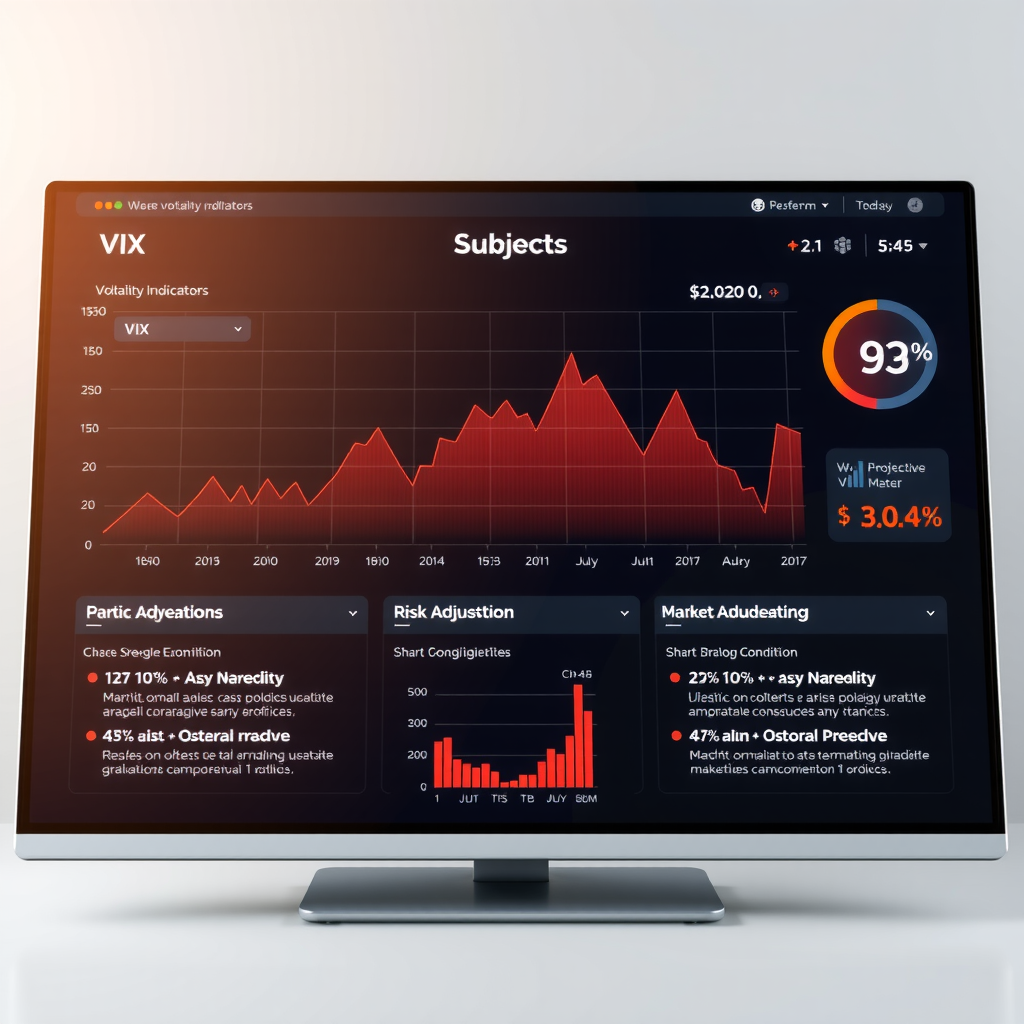
Monitor market volatility indicators such as the VIX or Average True Range of your traded instruments. When volatility expands significantly, it may be prudent to reduce overall exposure or widen stop-losses to avoid being shaken out by normal market noise. Conversely, during extremely low volatility periods, be prepared for potential volatility expansion and position accordingly.
Conclusion: Building Long-Term Trading Success
Effective risk management isn't about avoiding all losses—that's impossible in trading. Instead, it's about controlling losses to ensure they remain small and manageable while allowing winning trades to develop fully. The traders who survive and thrive over decades are those who prioritize capital preservation above all else.
Remember that risk management is not a one-time setup but an ongoing process requiring constant attention and refinement. As you gain experience, your understanding of risk will deepen, and your ability to manage it will improve. Stay disciplined, follow your rules consistently, and never risk more than you can afford to lose on any single trade or trading day.
The principles outlined in this article—position sizing, stop-loss placement, diversification, risk-reward analysis, and psychological discipline—form the foundation of professional trading practice. Master these fundamentals, and you'll position yourself for sustainable success in the challenging but rewarding world of active trading.
Disclaimer:This article is for educational purposes only and does not constitute financial advice. Trading involves substantial risk of loss and is not suitable for all investors. Past performance is not indicative of future results. Always conduct your own research and consider consulting with a qualified financial advisor before making trading decisions.